Member Login

Celebrating Excellence in 3MT: Our Centre’s Outstanding Participants

We are thrilled to share the incredible achievements of our PhD researchers in the recent Three Minute Thesis (3MT®) competition! The 3MT is a prestigious event where researchers present their work in just three minutes, capturing the essence of their thesis in an engaging and accessible way.

Akash Hettiarachchi’s Win at the QUT Faculty of Business and Law

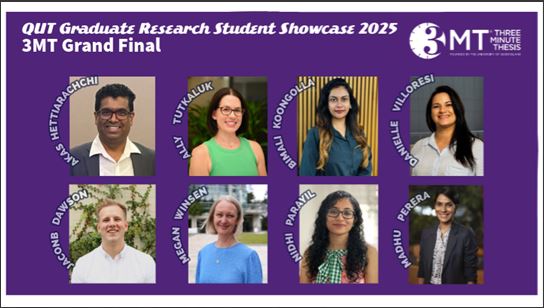
A massive congratulations to our PhD researcher, Akash Hettiarachchi, for winning the QUT (Queensland University of Technology) Faculty of Business and Law’s 3MT® Final! Akash’s presentation on the impact of collaborative robots (cobots) in enhancing diversity—particularly gender and generational diversity—in the manufacturing workforce was truly inspiring. This victory paves the way for Akash to advance to the Grand Final at the Graduate Research Student Showcase on 11th September at QUT. The winner of this final will represent Australia at the Asia-Pacific competition, where over 900 universities from 85 countries compete.

Akash is part of our Centre’s Human-Robot Workforce team, led by A/Prof Penny Williams, Prof Greg Hearn, and Postdoctoral Research Fellow Dr. Melinda Laundon. You can read more about Akash’s project here: Read More. We are incredibly proud of Akash and excited to support him in the next stage of his journey!

Recognising Other Remarkable Participants

We would also like to acknowledge the outstanding achievements of two of our researchers who participated in the 3MT competition:

  • Danial Rizvi, a PhD researcher from UTS, represented our Centre in the UTS competition. His insightful presentation was a reflection of his dedication to advancing knowledge in his field.

  • Jacob Dawson, an Associate PhD, won the QUT Faculty of Engineering (FoE) 3MT® round and will join Akash in the QUT Grand Final on 11th September.
2025 HDR & Postdoc Winter Retreat: Career Pathways and Success Strategies

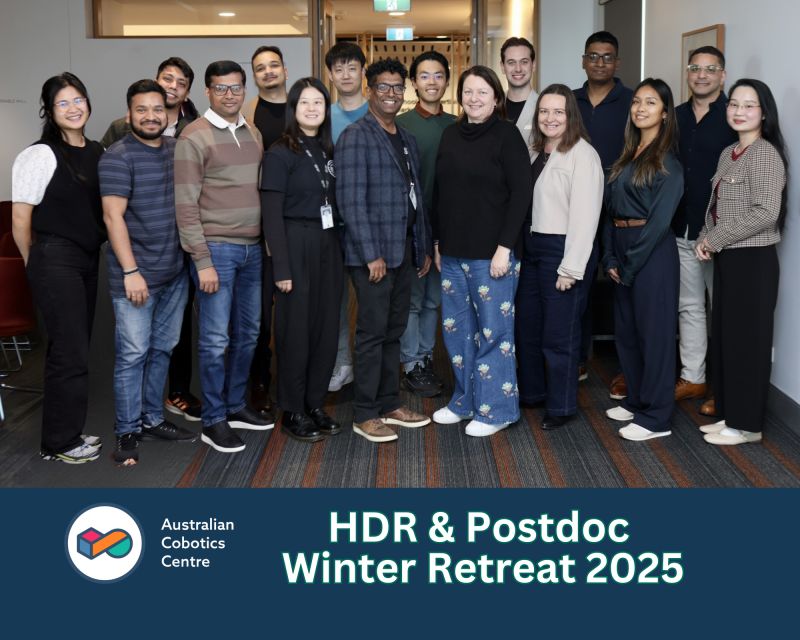
The 2025 HDR & Postdoc Winter Retreat brought together HDR students and early career researchers from across various disciplines, providing them with invaluable insights into shaping their future careers.

Day 1 – Defining Professional Identity and Exploring Careers Beyond Academia

Day 1 focused on preparing researchers for career pathways beyond their PhDs. Led by Associate Director for Research Training, Professor Glenda Caldwell, the day’s activities helped participants reconnect with the broader skills developed during their research journey. Workshops included:

  • Defining Professional Identity: Led by Karen Cavu (FHEA) and Glen Murphy (QUT Entrepreneurship), researchers learned how to articulate their professional identities, empowering them to recognize the value they can bring to various industries.

  • Informational Interviews & Networking: Dr Abigail Winter (SFHEA) and Karen Cavu emphasized the power of informational interviews, guiding researchers on how to leverage these conversations for career growth.

  • Industry Careers Panel: Featuring Dr Tom Williamson (Stryker), Dr Anjali Jaiprakash (Gelomics), and Dr Maria Hameed Khan (QUT Centre for Decent Work & Industry), the panel shared inspiring stories about transitioning from academia to industry, showcasing the diverse career paths available for researchers.

The day concluded with a relaxed networking session with drinks and pizza, providing an opportunity to connect and reflect on the day’s insights.

Day 2 – Research Career Success on Your Own Terms

The second day featured a full-day workshop led by Prof Inger Mewburn, also known as the Thesiswhisperer, titled “Research Career Success (on your own terms).” This workshop brought together researchers from various QUT research centres, focusing on:

  • The real career landscape for researchers today.

  • Exploring diverse career opportunities for PhD graduates.

  • Practical strategies for career development, including traditional networking and the use of cutting-edge AI tools.

Throughout the workshop, Inger gathered live feedback, which reflected the growing confidence and evolving career perspectives of the participants. The session provided both a reality check and an empowering look at the many career opportunities available to researchers.

A heartfelt thank you to everyone involved, especially Prof Inger Mewburn for leading such a transformative session. We look forward to putting these insights into action as we continue to support our researchers in their career development.

ARTICLE: Solving manufacturing’s labour crunch: Why job quality and collaborative robots must go hand-in-hand

The Albanese Government’s Future Made in Australia agenda has committed $22.7 billion over the next decade to rebuild sovereign manufacturing capability, capture low-carbon supply-chain opportunities and lift advanced industry productivity. Yet money alone will not solve the worker shortages that have persisted since COVID-19. Even after a 4.5 per cent fall in the February quarter, there were still more than 15,000 unfilled manufacturing positions and vacancy rates remained 44 per cent higher than before the pandemic. 

Although the proportion of vacant jobs in Australia decreased to 2 per cent in March, that headline masks deep, persistent shortages in key trades and technician roles. Unless industry and government tackle the root causes, the Future Made in Australia investments risk running into a human-capital wall. 

Qualitative research conducted by the Australian Cobotics Centre’s (ACC’s) Human-Robot Workforce Research Program and presented at the 2025 AIRAANZ conference by postdoctoral researcher Dr Melinda Laundon was based on interviews with 23 senior stakeholders across government, industry bodies, unions, and education providers. The research highlights three intertwined problems contributing to why enough workers aren’t joining or staying in the manufacturing sector.  

  • Earnings quality. At the sector level, manufacturing pay has struggled to keep pace with construction and transport, and is eclipsed by mining.  
  • Job security perceptions. Although views are changing to recognise that automation can make jobs safer and more interesting and increase production capacity, some workers still worry that automation may remove jobs. 
  • Working environment. Rigid shift patterns sit awkwardly beside the flexibility many Australians tasted during the pandemic. Under-investment in training may also leave employees uncertain about career progression. 

The research suggests some policy and organisational actions that may reduce labour shortages by improving job quality, attraction and retention. Stakeholders argued that raising hourly rates is necessary but not sufficient; manufacturers also need to: 

  • Provide up-skilling pathways. Investing in training for robotics, programming and digital twins both raises earnings potential and signals that workers have a future in the firm.  
  • Design human-centric technology deployments. Cobots can augment dirty, dangerous and highly repetitive tasks, reducing physical strain and freeing people for higher-value problem-solving.  
  • Embed employee voice. Involving operators in the redesign of workflows and role changes builds trust and ensures that cobots and other advanced manufacturing technologies can be implemented in a way that enhances job quality. 

These suggestions align with the government’s Industry 4.0 ambitions yet remain challenging for the small and medium enterprises (SMEs) that make up 98 per cent of Australian manufacturers. Fast turnaround and lower-cost microcredentials can be more accessible for SME owners and workers. Government and industry associations also have a role to play in promoting a manufacturing career narrative, highlighting success stories and the capacity for workers to move to tech-enabled roles with higher pay and autonomy.  

The ACC partners with manufacturers and technology providers to pilot human-robot solutions in real manufacturing contexts, drawing on expertise from design, engineering, quality assurance, and people management researchers. For governments rolling out Future Made in Australia programs and organisations considering cobot adoptions, it shows how technology adoption can lift productivity and job quality, not trade one off against the other. 

Insights on China’s Humanoid Robotics Advancements: Dr. Alan Burden Weighs In

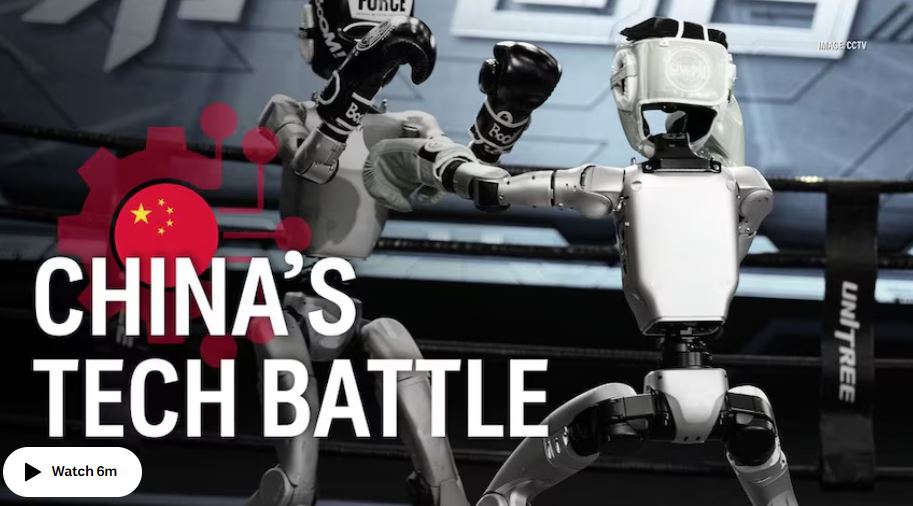
The Australian Broadcasting Corporation (ABC) recently highlighted China’s rapid advancements in humanoid robotics, with some experts predicting that the country may soon surpass the United States in this emerging field. The article features valuable insights from our very own Postdoctoral Research Fellow, Dr. Alan Burden, who offers expert commentary on why humanoid robots are capturing the public’s imagination.

Dr. Burden, based at Queensland University of Technology (QUT), explains that humanoid robots are appealing because their human-like form makes them more relatable. This allows the public to more easily envision these robots playing real-world roles, despite the technology still having some distance to go in terms of functionality and autonomy.

Dr. Burden’s perspective sheds light on the significance of humanoid robots as a symbol of technological progress, and he offers insights into the potential they hold for future applications.

For a deeper dive into this topic, check out the full article here: Read More.

Celebrating the Robotics & Advanced Manufacturing Centre at TAFE Queensland!

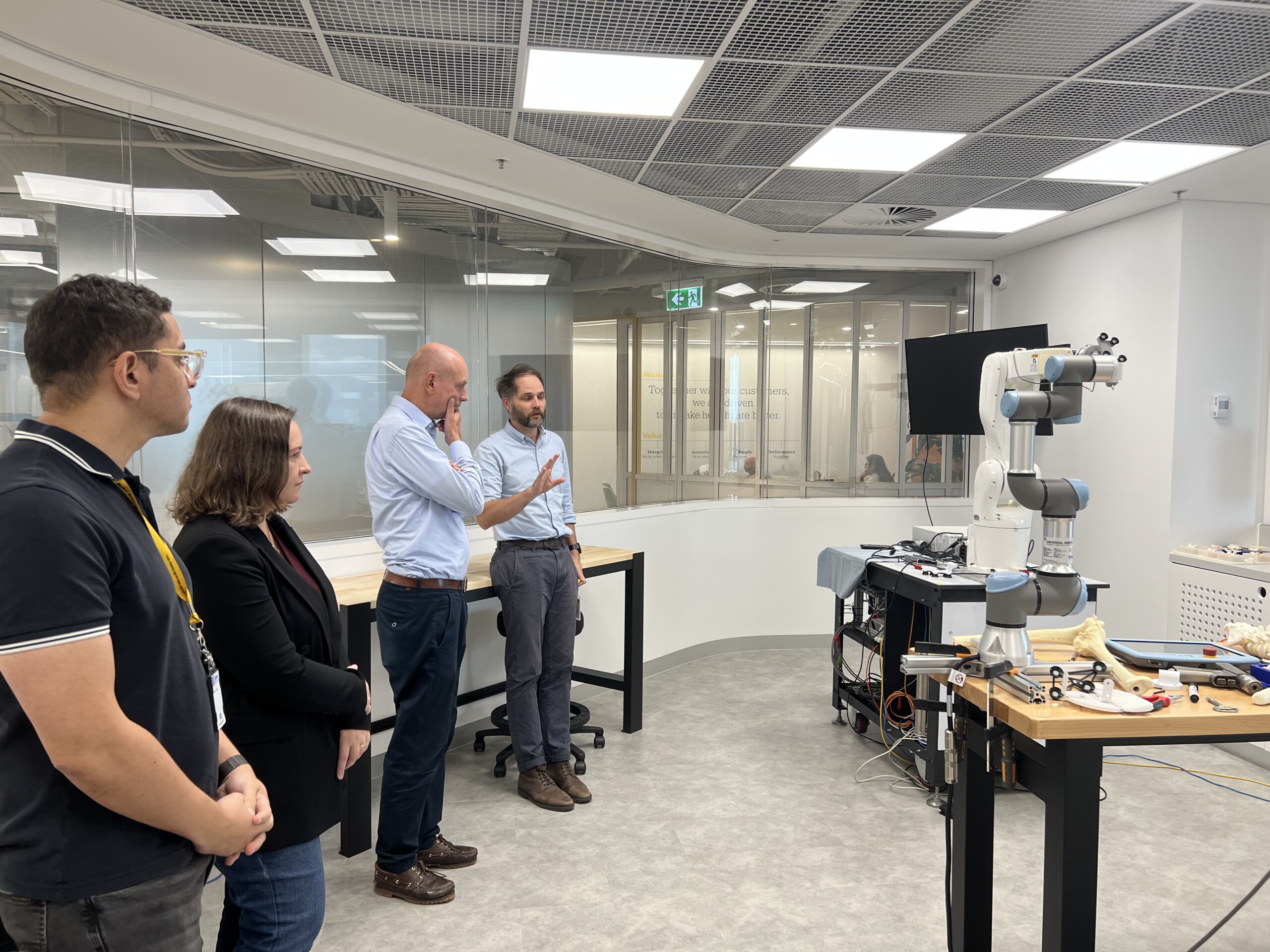
On 17th June 2025, our Centre was part of the official opening of the Robotics and Advanced Manufacturing Centre (RAMC) at TAFE Queensland Eagle Farm campus. This 5-Star Green Star-rated facility was officially launched by The Honourable Ros Bates MP, Minister for Finance, Trade, Employment and Training and included Minister Tim Nicholls MP and a talk from ARM Hub‘s Technical Lead, Dr Troy Cordie

As part of the opening, TAFE opened their doors for an Industry Open Day. Centre Director Prof Jonathan Roberts, Centre Manager Merryn Ballantyne, and PhD researcher Jacqueline Greentree spoke with over 150 attendees about our exciting initiatives and upcoming events.

The Open Day also included stands and demonstrations from Mynt Energy Tech, ARM Hub, Aptella, Infinispark, and HFS Design (formerly Micromelon Engineering) providing a showcase of Queensland’s collaborative innovation ecosystem.

Thank you to TAFE Queensland for inviting us to be part of the event and to Benaiah Fenby and team for organising such a wonderful day. The new TAFE Centre is a fantastic step forward in preparing Queensland’s workforce for the future of work in emerging and sustainable industries. And, as one of our Centre’s industry partners, we look forward to continuing to work together to ensure manufacturers are equipped for the next generation of advanced manufacturing.

📸 TAFE Queensland, Merryn Ballantyne, Jonathan RobertsNo alternative text description for this image

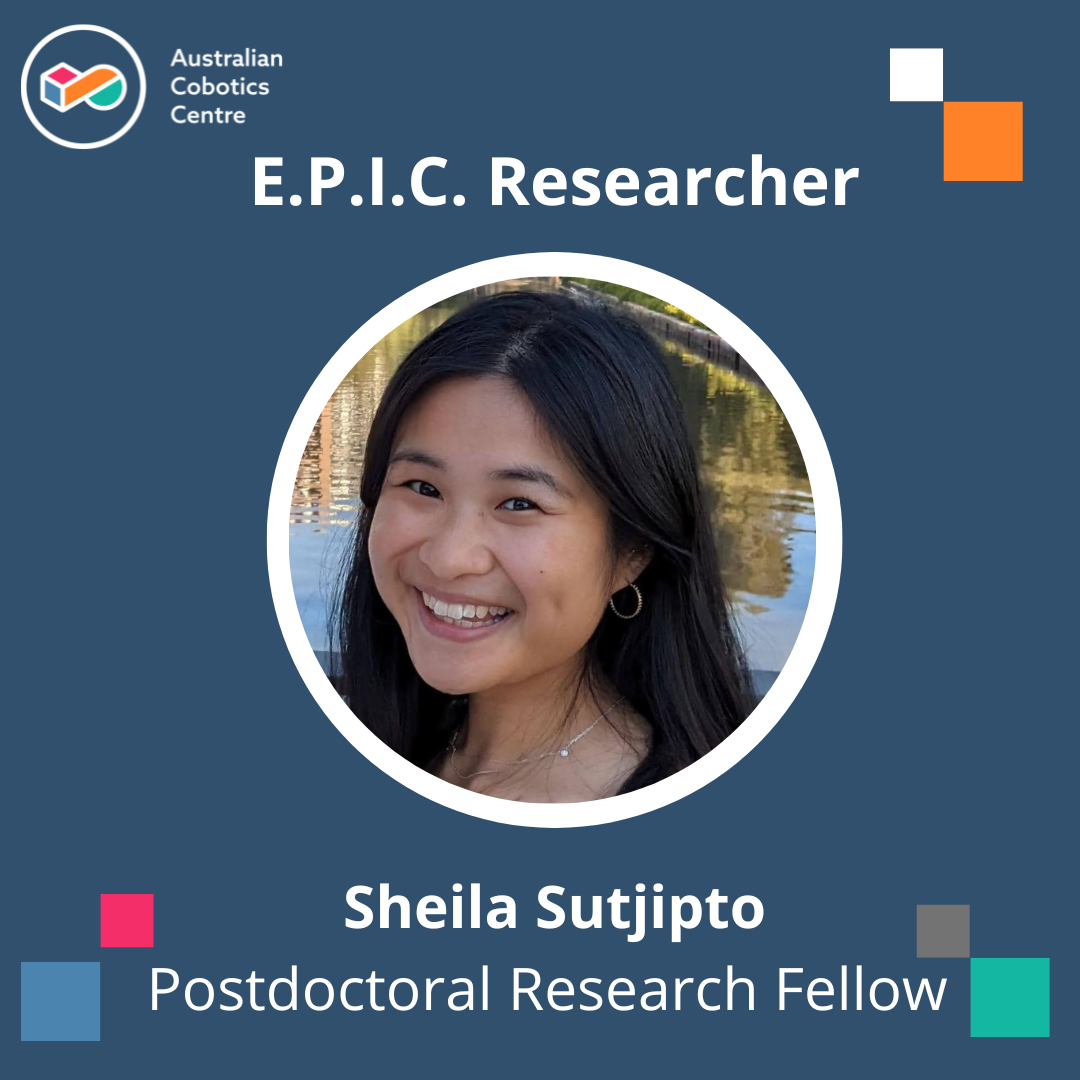
Meet our E.P.I.C. Researcher, Sheila Sutjipto

Sheila Sutjipto is a Postdoctoral Research Fellow in the Biomimic Program where her research explores physical human–robot interaction (pHRI). She is particularly interested in how robotic manipulators can intelligently respond to subtle environmental cues whether through deliberate, high-level actions or instinctive, reflex-like behaviours.

We interviewed Sheila recently to find out more about why she does what she does.


Tell us a bit about yourself and your research with the Centre? Include the long-term impact of what you are doing.

I’m a postdoctoral research fellow for Program 1: Biomimic Cobots at the Australian Cobotics Centre. I hold a bachelor’s degree in mechanical and mechatronic engineering and completed a PhD in robotics exploring how collaborative robots (cobots) can effectively interact with humans in shared environments. My research focuses on physical human–robot interaction (pHRI), and I am particularly interested in how manipulators can intelligently respond to subtle cues from the environment, either with purposeful, high-level behaviours or instinctive, reflex-like reactions. In the long term, I hope my work supports the adoption of robotic systems in industry.  

Why did you decide to be a part of the Australian Cobotics Centre?

The Australian Cobotics Centre offered a unique opportunity to conduct research that’s both academically rigorous and closely aligned with industry needs. There’s a diverse range of projects across the Centre, which makes it an interesting place to learn about other facets of robotics and their impact on how people interact with and benefit from this technology in their workplace. 

What project are you most proud of throughout your career and why?

One project I’m proud to have contributed to is the HALO project. It was a unique experience because I was involved from the very start, which meant I could work closely with our industry partner to understand their needs and the challenges they faced. That insight shaped how we approached ideation, prototyping, and testing, both in the lab and on-site at a mine, and with their ongoing feedback, we were able to deliver a robotic system that worked with their operational needs. 

I had the opportunity to contribute to both the software and hardware design of a custom mobile manipulator for rock scaling and learned a lot about managing a research project along the way. It was especially rewarding to see the system used by operators in the field and know the work could potentially make a difference. 

It was also valuable to be able to work alongside great researchers, many of which are with the ACC, including A/Prof. Gavin Paul, Prof. Teresa Vidal Calleja, A/Prof. Marc Carmichael, and Tony Le, and to see many students contribute to the project through their capstone projects, which made the experience more fulfilling. 

What do you hope the long-term impact of your work will be?

I hope my work helps develop cobots that support people whether that’s by making tasks safer, reducing physical strain, or just making things a bit easier for people day to day. Through the projects I’ve been part of, I hope some of that research finds its way into real workplaces and makes a practical difference. 

Aside from your research, what topic could you give an hour-long presentation on with little to no preparation?

Aside from my research, I could probably give an hour-long talk on where to get good coffee in Sydney. It’s not a definitive guide though, it’s more like a collection of places I like and keep going back to.  

Fireside Chat Series Continues with B&R Enclosures

The Australian Cobotics Centre is thrilled to continue its Fireside Chat series with B&R Enclosures, one of our valued industry partners.

These informal sessions are designed to give our researchers deeper insights into how our partner organisations operate exploring where research intersects with daily business practices and how innovation is supported across teams and projects.

We launched the series with Vaulta on 8 May, and will be hosting a new industry partner every month throughout the remainder of 2025. Each session strengthens the bridge between research and real-world application, reinforcing our commitment to delivering meaningful industry outcomes through collaborative innovation.

The Fireside Chat series is part of our broader mission to prepare researchers to translate their work into practical, impactful solutions across Australian industries.

Learn more about our industry partners here: https://lnkd.in/gGCERvsi

Showcasing Human-Robot Collaboration Research at ICRA 2025

This week, Professor Teresa Vidal Calleja is representing the Australian Cobotics Centre at the prestigious IEEE International Conference on Robotics and Automation (ICRA) 2025 in Atlanta.

At the forefront of global robotics research, ICRA brings together the world’s leading experts to explore cutting-edge innovations in automation and intelligent systems. Professor Vidal Calleja will be presenting collaborative work between the UTS Robotics Institute and the Technical University of Applied Sciences Würzburg-Schweinfurt (THWS).

The paper, “Interactive Distance Field Mapping and Planning to Enable Human-Robot Collaboration,” is co-authored by Usama Ali, Lan Wu, Adrian Müller, Fouad (Fred) Sukkar, Dr Tobias Kaupp, and Prof Teresa Vidal Calleja. It explores new techniques to support more seamless and intelligent human-robot collaboration through advanced mapping and planning.

This research represents a significant step forward in enabling safer, more efficient shared workspaces between humans and robots.

🔗 Learn more about ICRA 2025

Mentoring the Future: 2025 Interdisciplinary Research Mentoring Program Now Open

We’re thrilled to launch the 2025 Mentoring Program for HDR students and postdoctoral researchers—now bigger and more collaborative than ever!

This year, the program brings together researchers and industry partners from across five leading Australian research centres and hubs:

  • Australian Cobotics Centre

  • Training Centre for Joint Biomechanics

  • Centre for Behavioural Insights for Technology Adoption

  • ARIAM Hub

  • Centre for Next-Gen Architectural Manufacturing (ArchManu)

Participants may be matched with a mentor or mentee from any of these Centres, creating unique opportunities to build cross-disciplinary and industry-connected networks.

About the Program

The program is designed to foster meaningful connections, promote professional development, and help emerging researchers build industry readiness and confidence.

Program Details:
• Commitment: Minimum of 6 meetings over 6 months
• Format: Flexible – virtual, in-person, or hybrid
• Structure: No set curriculum, but optional framework provided

Key Dates:
• Expressions of Interest Close: 10 June 2025
• Matching and Confirmation: Notifications by 13 June 2025
• Information Session (via Zoom): 19 June 2025, 2:00–2:30pm
• First Mentoring Meetings Begin: July 2025

Whether you’re an experienced industry professional or an early-career researcher eager to learn and grow, your participation is greatly valued. This is your chance to share knowledge, expand your network, and contribute to the next generation of research leaders.

🔗 Submit your Expression of Interest by COB 10 June: Complete the EOI here

If you’re unable to participate this year, we’re planning to run the program again in 2026—so stay tuned for future opportunities!

Shaping the Future of Work: Penny Williams Presents at International Conference in Sweden

Last week, Associate Professor Penny Williams, Program Lead for the Human-Robot Workforce at QUT and the Australian Cobotics Centre, presented at the Creating Sustainable Work Conference hosted by Karolinska Institutet in Sweden.

Penny’s presentations explored two critical and timely topics: the gig economy and algorithmic work—areas central to understanding how digital technologies and algorithmic management are reshaping contemporary workforces. Her insights contribute to the growing body of research on how technology is influencing job structures, autonomy, and worker wellbeing.

While in Sweden, Penny also participated in international collaboration meetings as part of the ALGOSH project (Algorithmic Management at Work), an initiative funded by Forte. ALGOSH investigates the impact of algorithmic management on worker safety, health, and well-being, with a unique focus on non-platform work settings.

This work complements the mission of the Australian Cobotics Centre, which is committed to ensuring that human-robot collaboration develops in a way that is ethical, sustainable, and beneficial for workers.

🔗 View the conference program