Written by PhD Researcher, Jasper Vermeulen, Designing Socio-Technical Robotic Systems program.
When people think about Human-Robot Collaboration, they often imagine a worker and a robot side by side, completing a task together. This image has shaped much of the discussion around collaborative robotics. It is simple, compelling, and often useful.
However, new research suggests that this picture may be incomplete.
In practice, successful Human-Robot Collaboration rarely depends on the worker and robot alone. It is often made possible by a wider network of people who configure, supervise, maintain, troubleshoot, adapt, and support the robotic system over its lifetime. While attention naturally focuses on the person closest to the robot, collaboration is often sustained by many others whose work is less visible but equally important.
In this sense, Human-Robot Collaboration is not only about how humans and robots work together. It is also about how people work together around robots.
Moving Beyond the Human-Robot Pair
Collaborative robots, or cobots, are often introduced with the promise of combining the strengths of humans and machines. Humans contribute flexibility, judgement, and problem-solving capabilities, while robots contribute precision, consistency, and ergonomic support.
This vision has been enormously valuable in advancing collaborative robotics. Yet it can also encourage us to focus primarily on the interaction between a single worker and a single robot.
Real workplaces are rarely that simple.
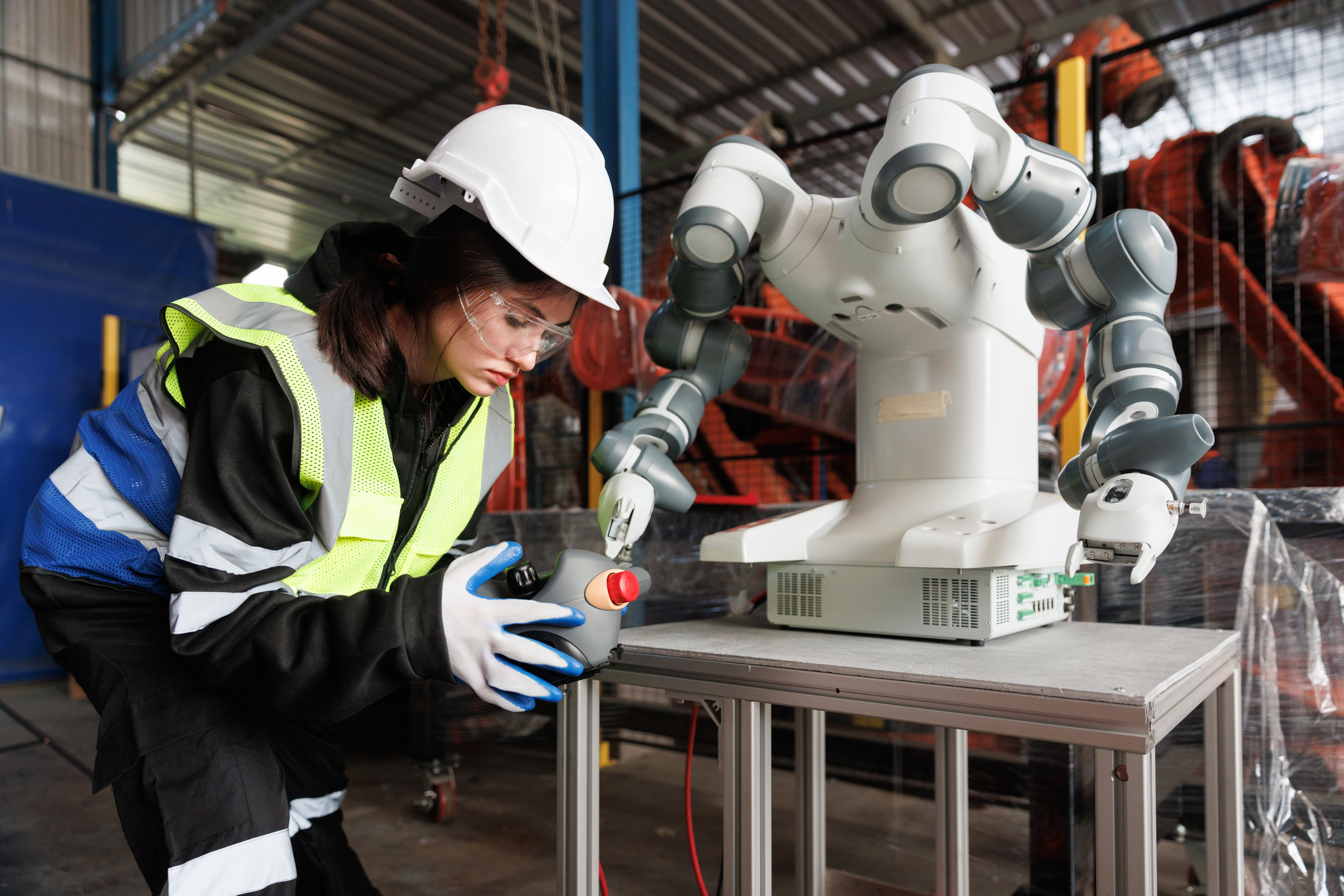
In manufacturing environments, successful cobot deployments often involve operators, supervisors, technicians, engineers, safety specialists, and system integrators. While these individuals may not always work directly alongside the robot, they play important roles in enabling effective collaboration.
The result is that Human-Robot Collaboration is often still dependent on Human-Human Collaboration.
The People Behind the Robot
Consider what happens when a cobot is introduced into a production environment.
Someone needs to configure and integrate the system. Someone needs to train workers. Someone needs to monitor performance, troubleshoot problems, and adapt workflows when unexpected situations arise. As production requirements evolve, someone must ensure that the robot continues to support organisational goals while remaining useful to workers.
These contributions are essential, yet they often receive far less attention than the technology itself.
In many organisations, individuals naturally emerge who help bridge the gap between human work practices and robotic capabilities. They may be engineers, technicians, supervisors, or experienced operators. Informally, they often become what some practitioners call “robot wranglers”: people who help make collaboration work in practice.
Their work matters because collaborative robots do not enter workplaces as isolated technical tools. They become part of existing routines, responsibilities, relationships, and constraints. Making them work well requires more than programming the robot. It requires ongoing coordination between people.
Designing for Teams, Not Just Isolated Users
Industry 5.0 makes this explicit: technology should be designed around people, not the other way around. This shift recognises that successful technology adoption depends not only on technical performance but also on human experience and organisational context.
Collaborative robotics should therefore not be viewed solely as a relationship between a worker and a robot. Instead, it should be understood as part of a broader socio-technical system involving multiple people, shared responsibilities, and coordinated expertise.
This has important implications for organisations considering cobot adoption. Investing in robotic technology is only one part of the equation. Equally important is investing in the people who support, maintain, adapt, and champion that technology over time.
This also matters for design. If collaborative robots are part of team-based work, then future systems may need to support more than the immediate operator. They may need to make system status clearer to supervisors, troubleshooting easier for technicians, handovers smoother between workers, and adaptation more accessible to the people responsible for keeping production moving.
What’s Next?
As robots become increasingly common across manufacturing and other industries, we may need to rethink how we define collaboration itself.
Rather than asking only how a human and a robot can work together, perhaps we should also ask how teams of people work together around a robot.
This raises several important questions:
- Who are the hidden contributors supporting Human-Robot Collaboration within your organisation?
- Are organisations investing enough in the people who help make cobot deployments successful?
- How might future robotic systems be designed to support entire teams rather than individual users?
After all, the future of collaborative robotics may not be about replacing human expertise. It may be about understanding how robotic technologies become part of successful human teams.
Human-Robot Collaboration may begin with a human and a robot, but it succeeds through the people who make that collaboration possible.