Member Login

News

E.P.I.C. Experiences: From collaborative robotics research to engineering education leadership

POSTED: 29 Oct, 2026
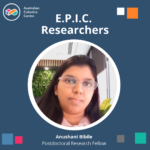
Dr Meriam Anushani Bibile joined the Australian Cobotics Centre in late 2022 as a Postdoctoral Research Fellow based at Swinburne University of Technology within the Quality Assurance and Compliance Program working with Dr Michelle Dunn and Dr Dr. Nathalie Sick. During her time with the Centre, she contributed to research supporting the safe and effective adoption of cobots in industry, as well as webinars, workshops, publications and industry engagement activities.

In August 2024, Anushani took the next step in her career, joining the Australian Institute of Higher Education (AIFE) as an Academic Discipline Coordinator (Engineering). Today, she leads the development and quality assurance of engineering programs while building international partnerships across Australia, Europe, the UK and the USA.

As part of our EPIC Experiences series, we’re catching up with former team members to learn where their careers have taken them, how their time at the Centre shaped their journey, and what advice they have for the next generation of researchers.

1. Where are you now, and what does your current role involve?
I’m an Academic Discipline Coordinator (Engineering) at AIFE (Australian Institute of Higher Education). I oversee the development, delivery and quality assurance of our engineering courses, and I teach both online and in person in China. I work with global partner universities in Australia, UK, Europe, USA, building bridges in international education.

2. What was the focus of your research at the Centre?
As a Postdoctoral Research Fellow at Swinburne University and Australian Cobotics Centre, I worked on research supporting Quality Assurance and Compliance in using Cobots in the Industry. I contributed towards research projects, webinars, workshops, publications and industry presentations, and was part of all Centre’s events.

3. One lesson from working with industry that has stayed with you
Good technology only succeeds when it fits the people and processes around it. Listening to end-users and industry partners early shapes better research, and quality assurance is what turns a promising idea into something people can trust.

4. How did your time at the Centre influence your career path?
The Centre broadened my background in electrical and computer systems engineering into collaborative, multidisciplinary research. Supervising students and building stakeholder networks strengthened my leadership. It also deepened my interest in quality, which I now apply to education.

5. Most rewarding part of your career since leaving?
Leading an engineering discipline and helping international students get a high-quality learning experience.

6. Advice for current HDRs

  • Build your network early, both inside and outside academia.
  • Talk to industry partners regularly, because their questions sharpen your research.
  • Keep clear records and publish steadily.
  • Use the Centre’s professional development program.
  • Stay open to career paths beyond the obvious ones.