Humanoid Robotics in the Spotlight: Australian Cobotics Centre Researchers Share Expertise with National Audiences
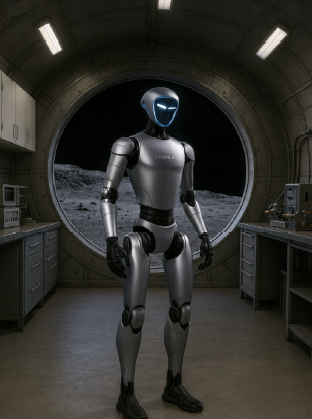
Humanoid robotics has captured global attention over the past year, driven by rapid advances in artificial intelligence, increasingly capable robotic platforms, and high-profile events such as the World Humanoid Robot Games. As public interest continues to grow, researchers from the Australian Cobotics Centre, based at QUT and Swinburne, have been helping audiences understand both the opportunities and challenges presented by these emerging technologies.
Throughout recent months, Professor Jonathan Roberts, Director of the Australian Cobotics Centre and QUT Centre for Robotics researcher, has appeared across television, radio and online media to discuss the current state of humanoid robotics, the impact of embodied AI, and the potential future role of humanoids in workplaces and everyday life.
Bringing Humanoid Robotics to a Wider Audience
Media appearances included interviews on ABC Radio, ABC Weekend Breakfast, and coverage connected to the World Humanoid Robot Games, helping explain what recent developments mean for industry and society.
A particular highlight was a feature on the Today Show, where Professor Roberts appeared alongside researcher Lauren Sherlock and two of QUT’s humanoid robots. Supported behind the scenes by Zongyuan Zhang as “Robot Wrangler”, the segment demonstrated humanoid robotics in action and provided viewers with a glimpse of how quickly the technology is evolving.
The team also featured on ABC Behind the News (BTN), introducing younger audiences to robotics and AI concepts and helping inspire future generations of researchers, engineers and innovators.
Through these appearances, Australian Cobotics Centre researchers have played an important role in moving the discussion beyond science fiction and helping the public understand the practical realities of humanoid robotics, including current capabilities, limitations and future applications.
From Research Labs to Real-World Conversations
Humanoid robots are increasingly capable of performing tasks that require mobility, perception and interaction with people. While significant technical challenges remain, advances in sensing, machine learning, embodied AI and human-robot interaction are accelerating development across the sector.
Researchers from the Australian Cobotics Centre continue to investigate many of these challenges, exploring how robots can safely and effectively work alongside people in manufacturing, healthcare and other human-centred environments.
The growing public interest generated by events such as the World Humanoid Robot Games has created valuable opportunities for researchers to discuss broader questions relating to trust, safety, workforce impacts, ethics and the role of robotics in society.
Humanoids at Swinburne
The excitement around humanoid robotics extended beyond Queensland, with researchers from Swinburne University of Technology also showcasing their work through national media appearances.
Swinburne’s humanoid robots SUT 3PO and Roci recently featured on Channel 7’s Sunrise program, where they interacted with weather presenter Sam Mac and students from John Monash Science School. The segment also incorporated Swinburne’s motion-capture technology, allowing students to experience live interaction within a virtual environment while exploring the possibilities of human-robot collaboration.
These demonstrations highlighted the combination of robotics, artificial intelligence, immersive technologies and education that is helping shape the next generation of intelligent systems.
Exploring the Humanoid Olympics
The conversation around humanoid robotics was also explored through a feature article examining the significance of the World Humanoid Robot Games and what these events reveal about the future direction of robotics research.
The article considered how competitions provide a valuable benchmark for evaluating humanoid capabilities while also stimulating discussion around the future deployment of embodied AI systems in factories, hospitals, homes and public spaces.
Watch and Listen
Catch up on some of the recent media coverage:
- ABC Behind the News (BTN): Humanoid Robots – Behind The News
- Today Show appearance featuring Professor Jonathan Roberts, Lauren Sherlock and QUT’s humanoid robots: https://www.linkedin.com/feed/update/urn:li:activity:7497780471494234112
- ABC Radio interviews:
- Australian Broadcasting Corporation (ABC) Radio 612 Brisbane with Mel Bampton– starts at 2:03:23 https://www.abc.net.au/listen/programs/brisbane-evenings/evenings/107066398
- Australian Broadcasting Corporation (ABC) 666 Radio Canberra with Alice Matthews – starts 1:44:45 – Afternoons – ABC listen
- Australian Broadcasting Corporation (ABC) Radio Sydney’s Evenings program with Renee Krosch – Listen here from around 2:36:24: https://lnkd.in/gg_XZ5Bj
- Perth 6PR Breakfast with Millsy and Karl
- ABC Weekend Breakfast coverage: ABC Weekend Breakfast – Jonathan Roberts talking about the 2026 Humanoid Games
- Channel 7 Sunrise featuring Swinburne humanoids SUT 3PO and Roci: Afternoons – ABC listen
- The Conversation article on the World Humanoid Robot Games and the rise of humanoid robotics: The ‘robot Olympics’ were spectacular – but will this technology end up helping humans?
As humanoid robotics continues to evolve, Australian Cobotics Centre researchers remain committed to providing evidence-based insights that help industry, government and the wider community understand the implications of these rapidly advancing technologies. From television studios to research laboratories, these conversations are helping shape a more informed discussion about the future of robots in our society.