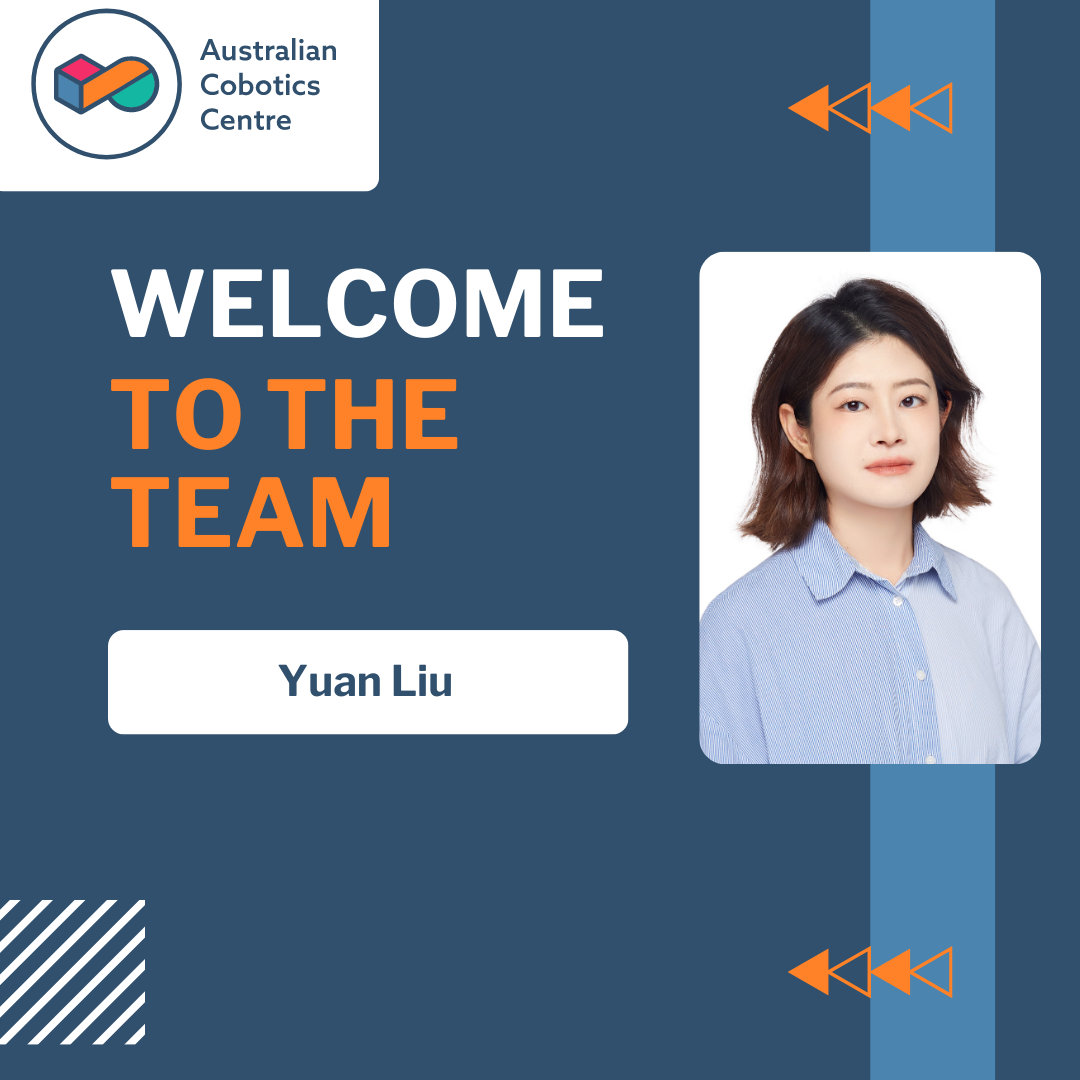
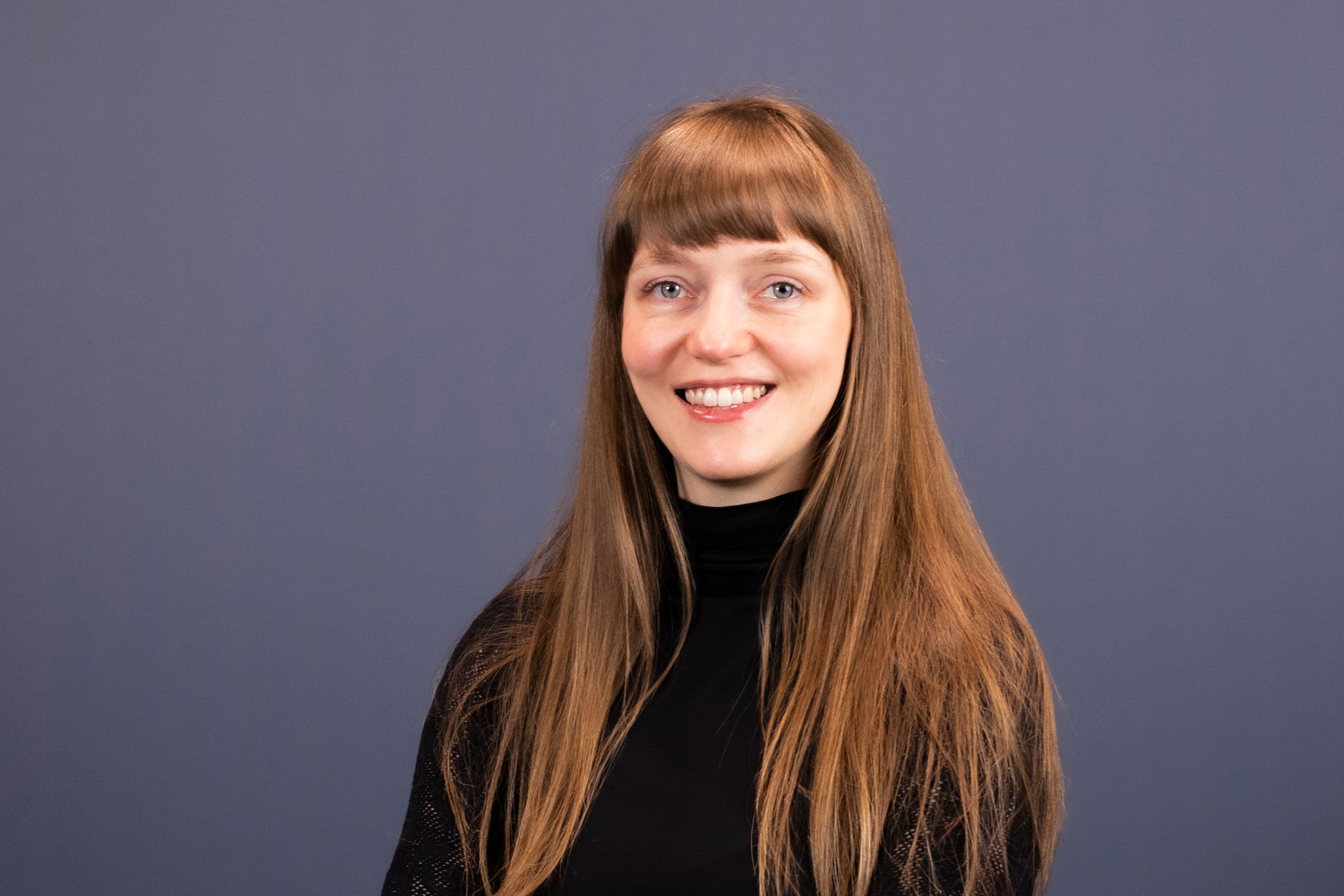
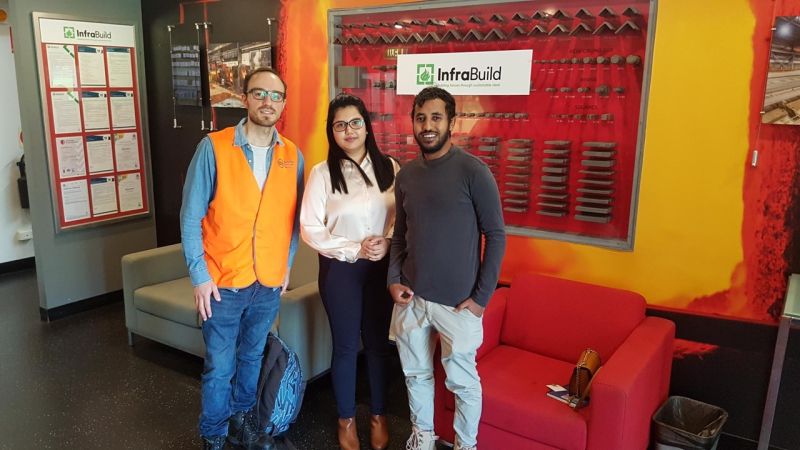
Yuan’s research will investigate co-design and development of immersive visualisation (i.e. augmented reality, virtual reality) approaches to simulate, prototype, and evaluate products and spaces for human-robot collaboration within real-world manufacturing processes and contexts. The benefits of using immersive visualisation approaches will include the ability to evaluate before, during, and after different collaborative robotic settings and necessary manufacturing process and spatial adaptations have been made.
Yuan’s current research interests will focus on multimedia technologies (Virtual Reality and Augmented Reality) and human computer interaction.
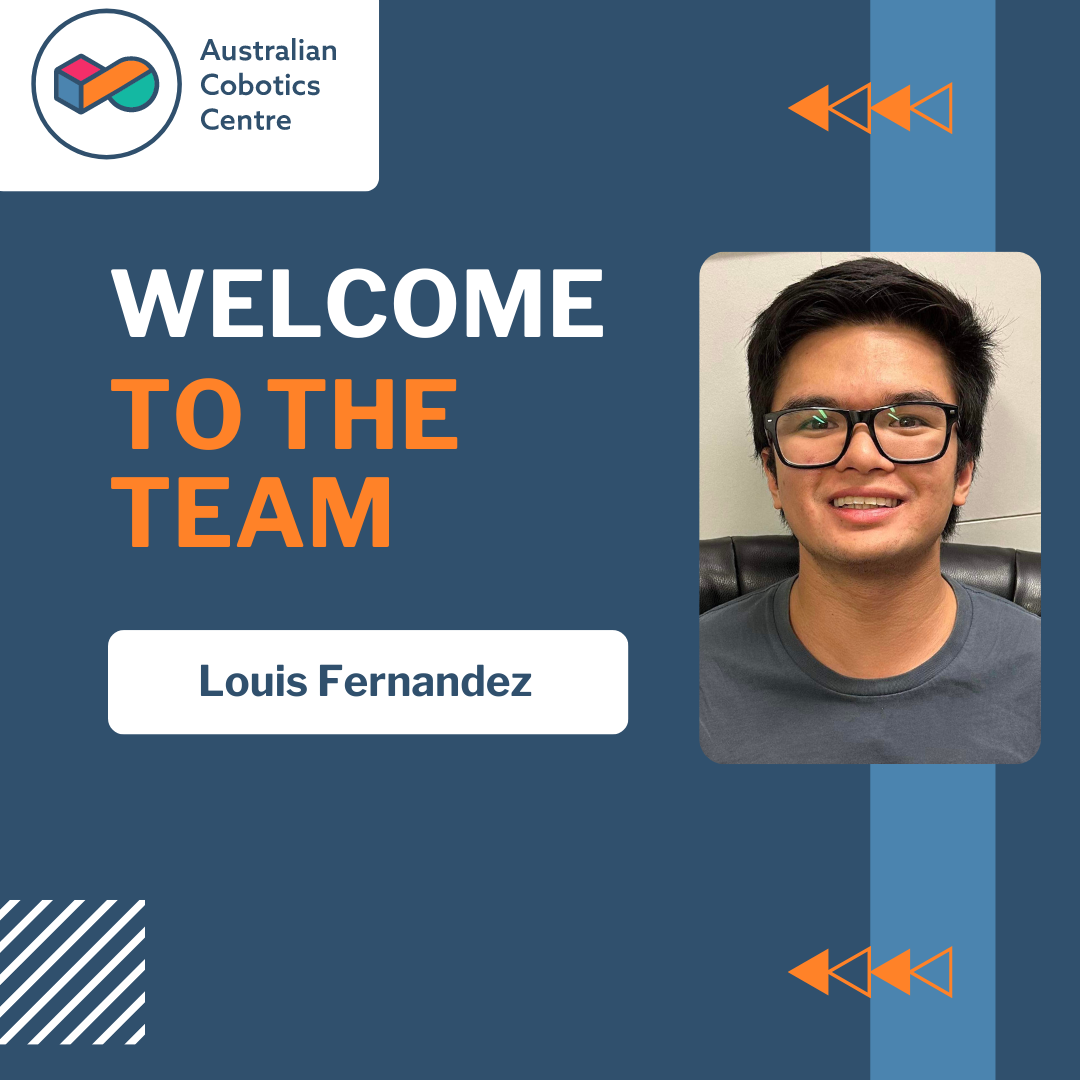
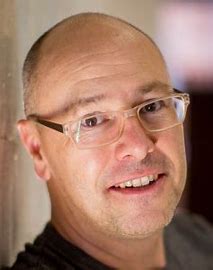
Welcome to Louis Fernandez! Louis is a PhD Researcher working on our Multi-modal Human Robot Collaboration project, which is part of the Human Robot Interaction program. He is based at UTS and supervised by Marc Carmichael.
Louis’s research will develop a vocabulary of multimodal HRC interaction techniques to accomplish tasks such as specifying the intended path for the robotic tool to follow by manually drawing onto the work surface, instructing the robot through naturalistic speech and gesture, and directly sensing feedback on the state of a robotic task through visual, auditory, and haptic feedback.
The project will also study the needs for human robot interaction in an authentic work context to make sure that the interaction techniques are appropriate for use in that setting.
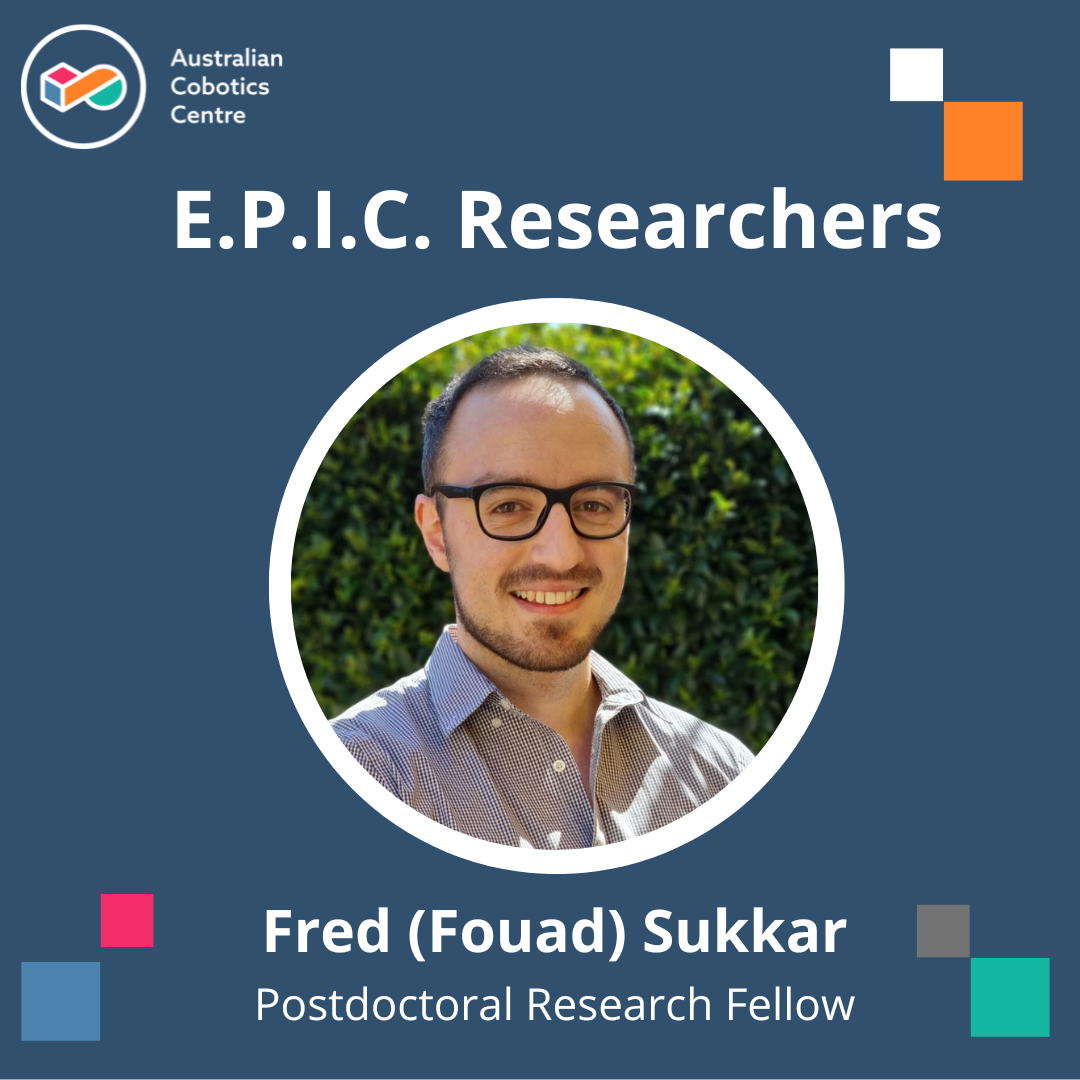
The Australian Cobotics Centre has some incredibly E.P.I.C. researchers. Each month we will be profiling a different researcher.
Fred (Fouad) Sukkar is a robotics researcher with several years of experience in the areas of agricultural robotics and industrial automation. Fred has been working on developing algorithms to enable natural and safe human-robot collaborative environments and is based at UTS.
We interviewed Fred recently to find out more about why he does what he does.
Tell us a bit about yourself and your research with the Centre?
I am the postdoctoral research fellow for the Biomimic Cobots program which aims to enable robot-human collaborative work environments. My work helps to make cobots (collaborative robots) more intelligent through bioinspiration in order to carry out practical and valuable work in the real world. Recently, as part of my work with program 1 we developed a first proof of concept robot design for identifying and removing short bars from a conveyor line for our industry partner Infrabuild. The design of the system was inspired by the way workers currently carry out this task. The broader aim of my work is to enable robots that behave naturally when performing tasks with and around humans and to make their jobs safer. This is an important step for robots to become widely adopted and embraced by the manufacturing industry.
Why did you decide to be a part of the Australian Cobotics Centre?
The ACC was a great opportunity to pursue my research interests alongside other prominent academics in the field. It was also an exciting opportunity to be a part of a first-of-its-kind effort to put Australia on the map for excellence and innovative research in manufacturing. The work with the centre extends my PHD research which was on robotic manipulator planning and perception. In particular, I developed principled algorithms to increase reliability and efficiency while having some practical guarantees about the robot’s behaviour. Also, this role will be an opportunity to translate my research to industry and also explore some of my future research such as leveraging robotic learning methods to improve performance and solve a wider range of problems.
What project are you most proud of throughout your career and why?
The work I did during my PhD on multi-robot active perception was a culmination of ideas to different problems I had been thinking about and working on for a long time while being in both academia and industry. It was the first real hardware demonstration of a system of its scale and complexity running in real time. The resulting paper titled “Multi-Robot Region-of-Interest Reconstruction with Dec-MCTS” won a best paper award at ICRA, the largest international robotics conference. The fundamental ideas behind this work are currently being used in the research I am working on with ACC.
What do you hope the long-term impact of your work will be?
My hope is that my work with the ACC will lead to truly human-robot collaborative work environments where robots improve the quality of life of workers, whether it be a safer workplace or empowering them to carry out tasks that they would not have been able to do otherwise. I also aim to establish myself as a leading researcher in the field with the help of my excellent collaborators in the Centre.
Aside from your research, what topic could you give an hour-long presentation on with little to no preparation?
Apart from robotics, music is a huge passion of mine and I could easily give a presentation on one or many of my favourite bands such as Radiohead, Nirvana, Pink Floyd, Led Zeppelin, The Mars Volta, Muse or Silverchair (just to name a few).
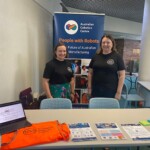
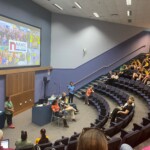
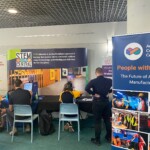
Thanks to Research program co-Lead, Matthias Guertler, PhD researchers, Munia Ahamed, and Fikre Hagos and visiting Masters researcher from Nuremberg University of Applied Sciences, Philipp Bauer, who represented the Centre at ‘Building a Pipeline of Engineers: UTS Connections’ on Wednesday.
The event, co-hosted by the University of Technology Sydney and Engineers Australia was an opportunity for businesses in the NSW region to hear about:
– projects that UTS students have been involved in,
– the benefits of hosting students as interns including the creation of a pipeline of talent for your organisation
– current students who are seeking internships and other opportunities.
If you are interested in exploring a partnership with the Australian Cobotics Centre please get in contact. We are looking for industry partners in NSW and would love to introduce you to our PhD researchers and their projects.
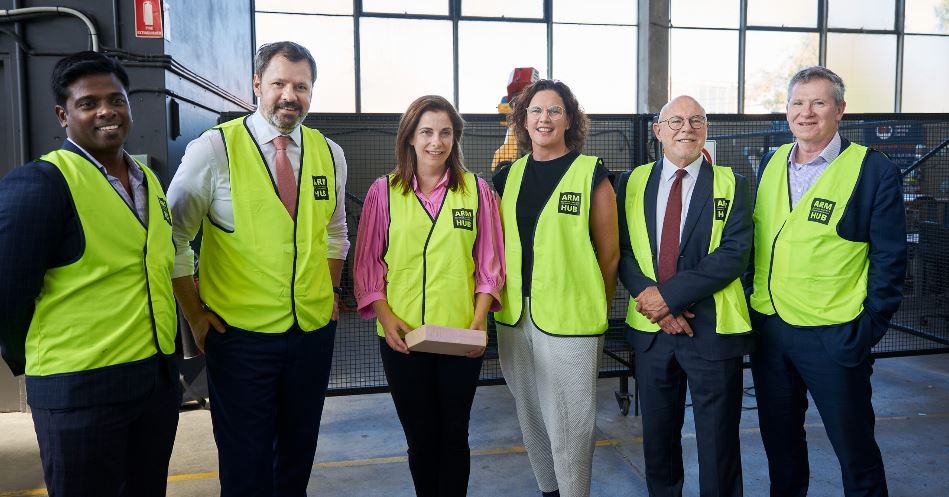
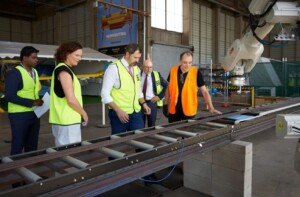
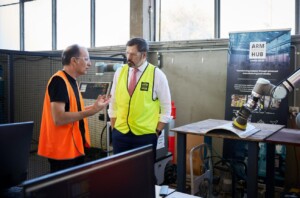
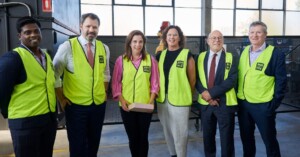
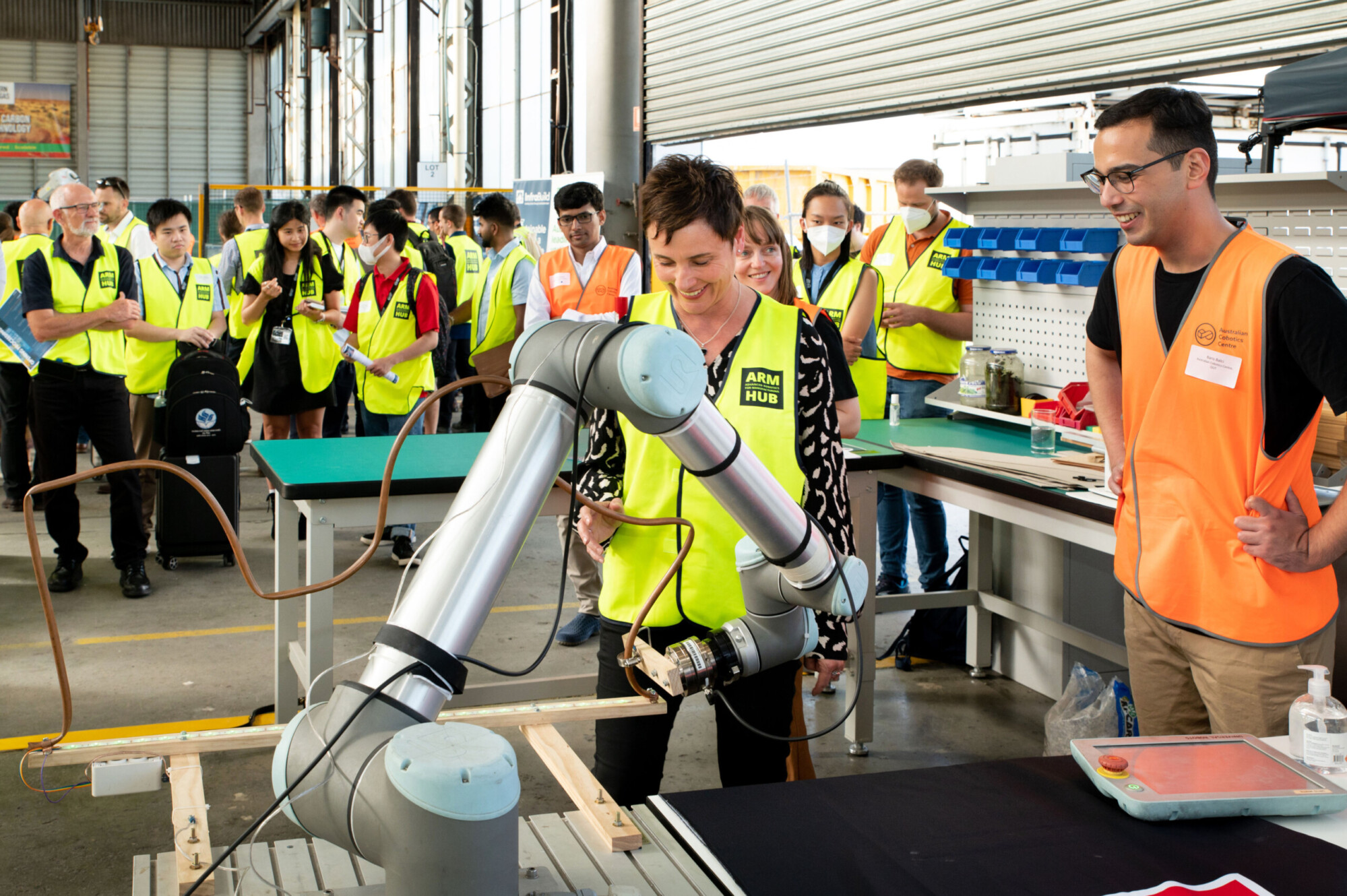
ACC PhD student Barış Balcı demonstrated his autonomous sanding research and ACC Director Jonathan Roberts showed the Centre’s work with ACC partner InfraBuild (whose Rooty Hill Steel Mill is in Ed Husic’s electorate). Other ACC people in attendance were Professor Roy Green (Member of the Centre Advisory Board), Associate Prof Cori Stewart (Centre CI and CEO of ARM Hub), Prof Will Browne (Centre CI) and Müge Belek Fialho Teixeira (Centre CI).
Thanks so much to ARM Hub for hosting this great event.
The team have developed guidelines, methods and principles to design safe cobots and cobot workplaces. These are fantastic resources for organisation who are planning on implementing collaborative robots (“cobots”) or are curious of how to work safely with cobots in general?
The project team have created a website full of useful resources that include:
– An introduction to, and general safety information, aspects of human-cobot collaboration.
– Guidance documents to assist in the planning of an upcoming or amended workplace.
– Checklists and assessments to assess an existing or future workplace’s safety features
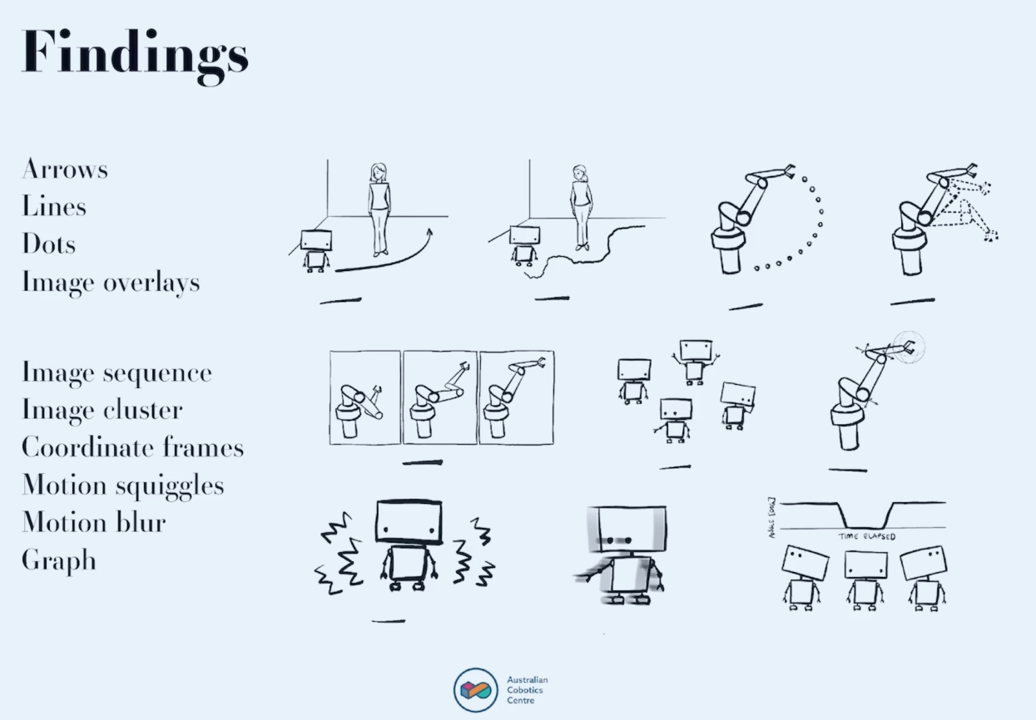
Postdoctoral Research Fellow, Dr Stine Johansen was at the IEEE Human Robot Interaction Conference this week where she presented her paper, Illustrating Robot Motions.
Stine created a video presentation of the paper which gives an overview of the survey and examples of findings relating to how robot movements are illustrated in the ACM/IEEE Conference on Human-Robot Interaction proceedings from 2016 to 2022.
By Melinda Laundon, Postdoctoral Research Fellow, and Jacqueline Greentree, PhD Researcher, Human-Robot Workforce Program, Australian Cobotics Centre
Almost 200 Grade 9 and 10 girls from Gladstone and surrounds gathered at CQUniversity for Try-a-Trade on 15th March. This event brought together manufacturing, aerospace, energy, mining, engineering and construction industry businesses and stakeholders from government and education to encourage female high school students to learn about a range of careers in STEM and try out some practical activities that they might encounter in STEM jobs.
It is important to engage high school students early to consider careers in manufacturing. The lower numbers of women in manufacturing make it particularly important to provide female students with opportunities to consider and experience diverse manufacturing career options. In Queensland, 29% of the current manufacturing workforce are women. While the proportion of women employed in manufacturing has grown dramatically over the past decade, most are in clerical or administrative roles. Only 11% of women in manufacturing are technicians and trade workers[1].
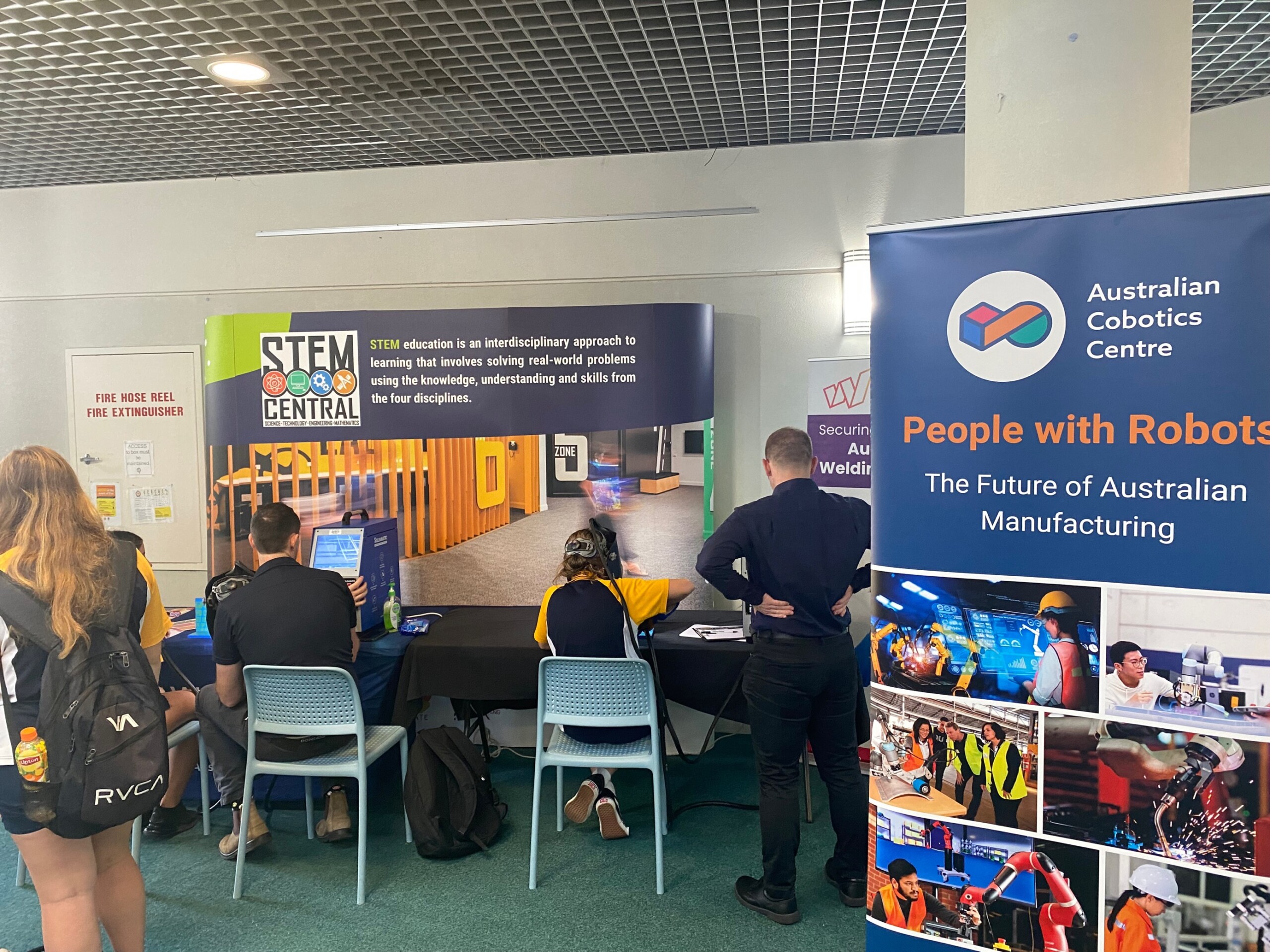
Australian Cobotics Centre industry partner Weld Australia hosted a stall at Try-a-Trade with two Soldamatic welding simulators. This popular activity allows people to experience welding in a safe environment. It also provided a fun competition between girls to compare their welding accuracy. Weld Australia’s Regional Training Coordinator, Adam Coorey said:
“To address the skills shortage, we need to give a greater range of access to the full available workforce. By utilising augmented reality technology, students who would normally shy away from the heat and sparks of a welding bay can try welding in a safe environment. This accessible technology gives students the opportunity to experience a career that they may thrive in”.
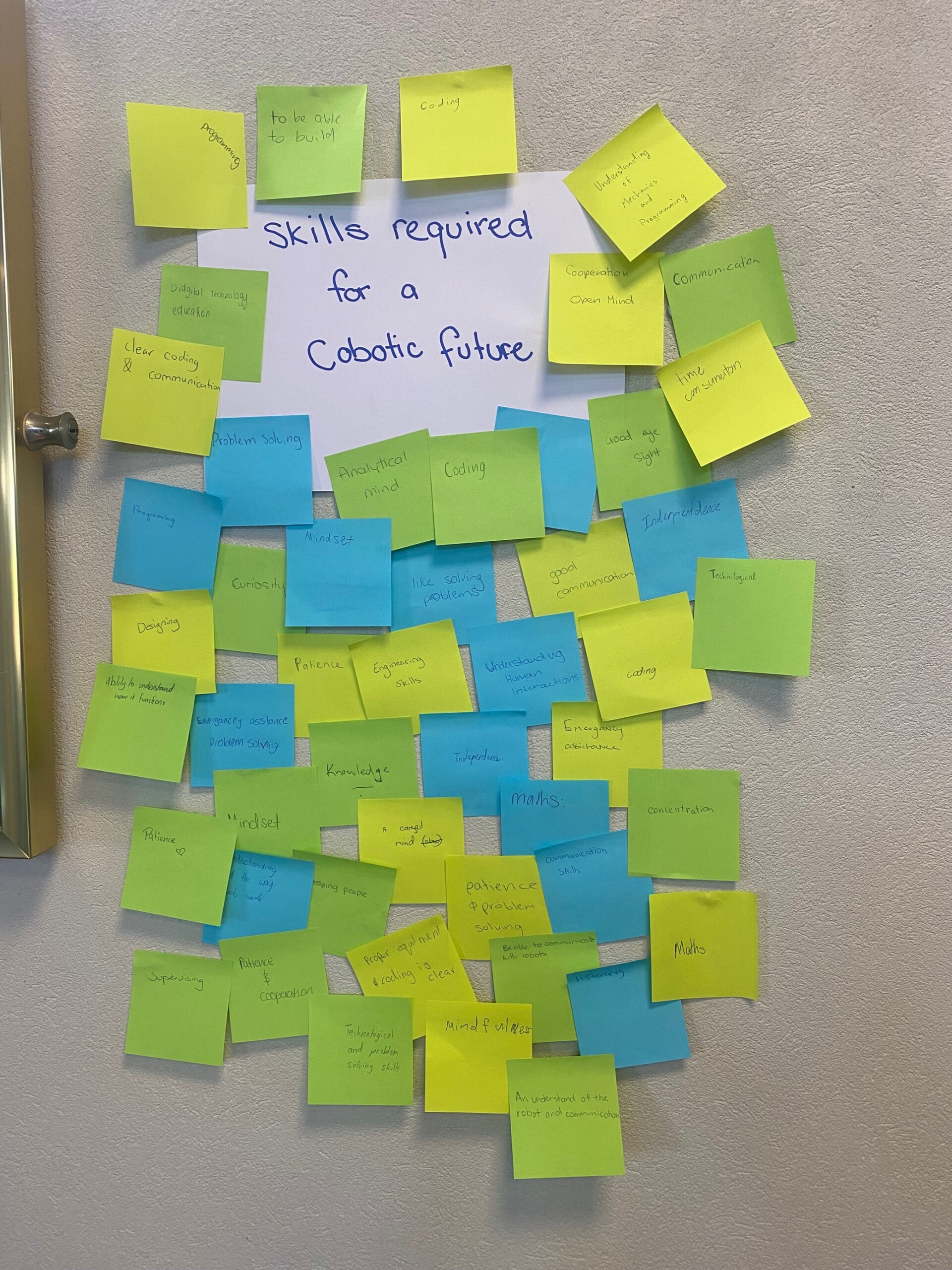
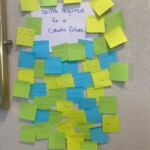
At the Cobotics Centre stall, we discussed the impact of cobots and other advanced technology on future work. We also asked students to think about the skills and attributes that would be required in the future to work with a cobot as a team member. They came up with many creative insights, including:
Problem solving skills
Patience
Understanding human interactions
Coding
Good communication
Independence
Curiosity
Designing
Digital technology education
To be able to build
Understanding of mechanics
[1] Queensland Department of Regional Development, Manufacturing and Water (2023) Women in Manufacturing Strategy.
Melinda Laundon, Adam Coorey & Jacqueline Greentree
Jacqueline trying out the Soldamatic
Melinda Laundon & Jacqueline Greentree at the stand
All of our postdocs and PhD researchers complete a minimum placement of 12 months over their time with us. Generally, this is completed across a number of partners and other organisations to provide our researchers with the industry case studies for their research to apply their research to real world problems, as well as giving them exposure to working in industry.
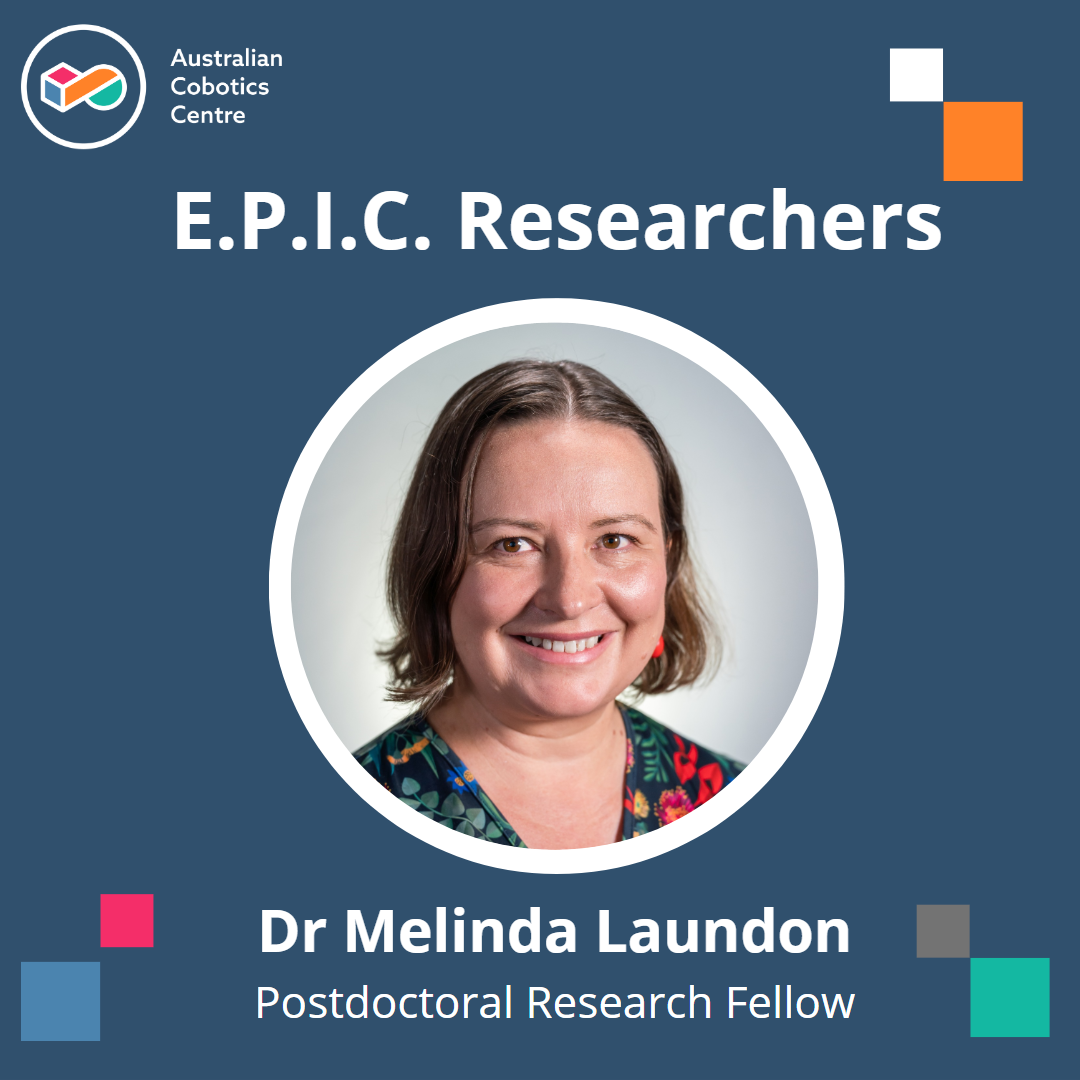
The Australian Cobotics Centre has some incredibly E.P.I.C. researchers. Each month we will be profiling a different researcher. Dr Melinda Laundon is a Postdoctoral Research Fellow with our Human Robot Workforce program and is based at QUT.
We sat down with Melinda recently to find out more about why she does what she does.
Tell us a bit about yourself and your research with the Centre?
I’m part of the Human-Robot Workforce research program. We have a broad scope to research the changing skills, capabilities, and composition of the Australian manufacturing workforce, including the influence of cobots on jobs, workers and organisations. My research is investigating attraction and retention of manufacturing workers, from the perspective of sector stakeholders, managers and the workers themselves. I hope it will help to understand how advanced technologies can change the way we attract people to careers in manufacturing, and help to address some of the crucial skills shortage issues in Australian manufacturing.
Why did you decide to be a part of the Australian Cobotics Centre?
I jumped at the chance to work with great researchers from many different disciplines, as well as the opportunity to engage with industry partners on issues that are immediately important and relevant. I could also see strong parallels between the Cobotics Centre’s commitment to sustainable growth and quality jobs in manufacturing, and QUT’s Centre for Decent Work & Industry, where I co-lead a research stream on sustainable transitions between education and work.
What project are you most proud of throughout your career and why?
I’m proud of my work with the Australian Research Council and universities to help academics and PhD students to plan for and achieve an impact on society from their research. I’m also proud of my roles as a mentor and assessor for Higher Education Academy (HEA) Fellowship schemes at QUT and other universities. HEA Fellowship emphasises the value of reflection, professional development to improve student learning, and sharing good practice with colleagues – all of which apply to research as well as university teaching.
What do you hope the long-term impact of your work will be?
I came to academia after a policy career in the Australian Public Service, including stints with the Australian Communications and Media Authority and the Australian Research Council. My PhD in management examined employees’ fairness perceptions at work, especially in relation to reward and recognition. I started my academic career with the intention of not only doing good scholarly research but also having a practical impact on organisations and public policy. I hope that my research helps to inform policy and practice by contributing deeper understandings of workers’ perceptions and needs.
Aside from your research, what topic could you give an hour-long presentation on with little to no preparation?
This is a tough one! I might have to break it up into a few smaller lectures on different topics including Scottish and Australian crime fiction, Australian slow fashion labels, and music played on Triple J in the late ‘90s and early 2000s.
Contact Us
If you have a message or question, fill in the form below and we'll be in touch as soon as possible.