WHEN: 30 Sep
WHERE: Zoom
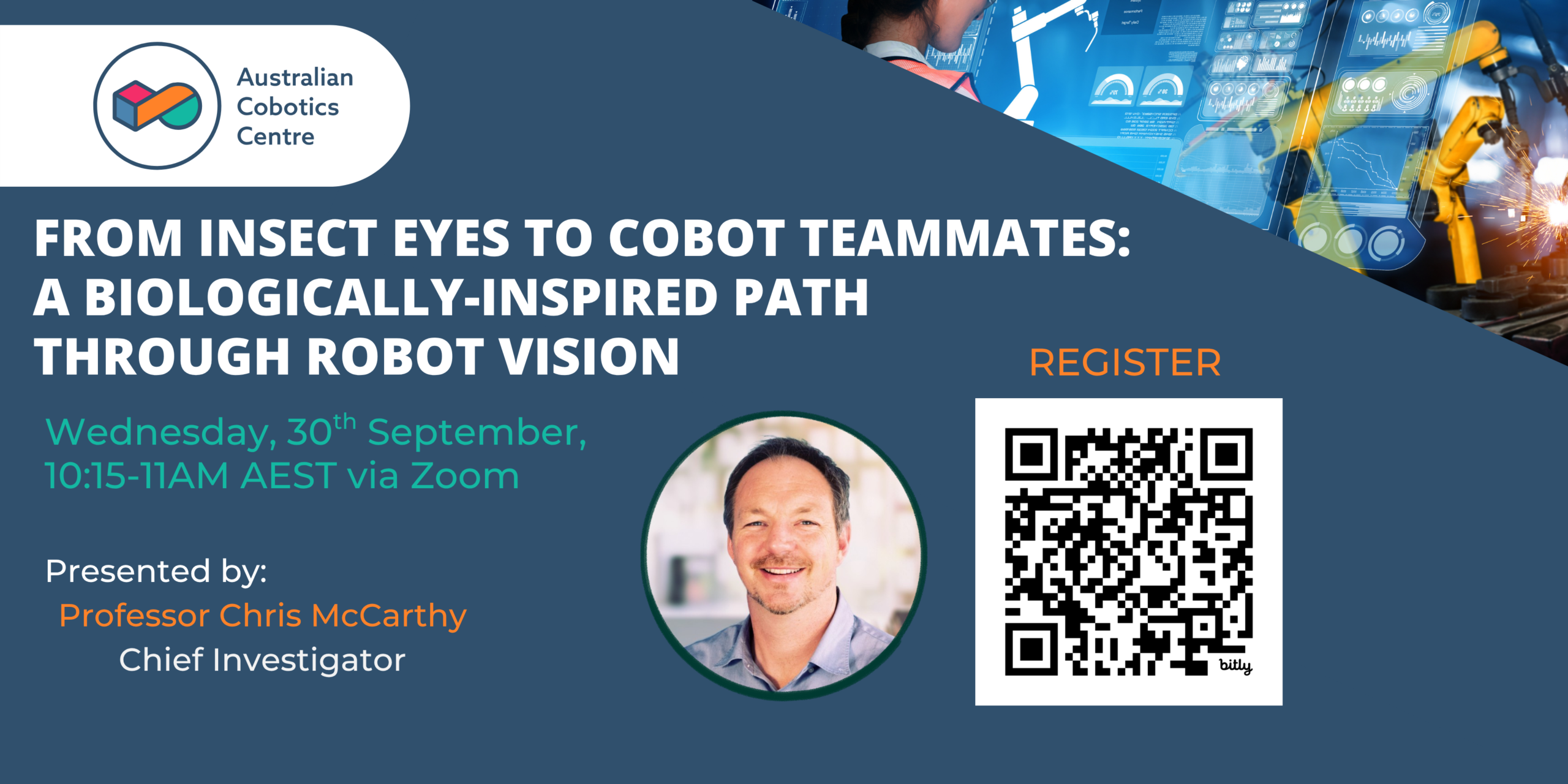
From Insect Eyes to Cobot Teammates: A Biologically-Inspired Path Through Robot Vision
What does a robot really need to see?
For decades, computer vision has often approached this question by trying to reconstruct the world in full 3D, and only then decide what to do. But biological vision suggests another possibility. A bee landing on a flower does not build a 3D model of the flower. A person catching a ball does not first reconstruct the room around them. Instead, vision extracts the motion and structure that matter for the task, and uses them directly to guide action.
In this talk, I’ll follow this idea through three problems that, at first glance, seem quite different: helping robots navigate and perceive depth from a single moving camera; controlling a robot arm as it approaches and aligns with a surface, without reconstructing the surface itself; and enabling robots to anticipate human actions early enough to work with us as genuine teammates.
These problems point to two broader lessons from biology. The first is strategic: see what matters, and use it directly. The second is more subtle: the eye itself is part of the computation. Biological eyes are shaped to make useful information easier to extract, rather than leaving all of the work to the brain.
From the near-panoramic vision of an insect to retina-like “event cameras” now flying on racing drones, I’ll explore how these ideas can lead to simpler, faster, and more robust robot vision — and why that matters when robots need to move safely and naturally around people, including on the factory floor.
No technical background required.